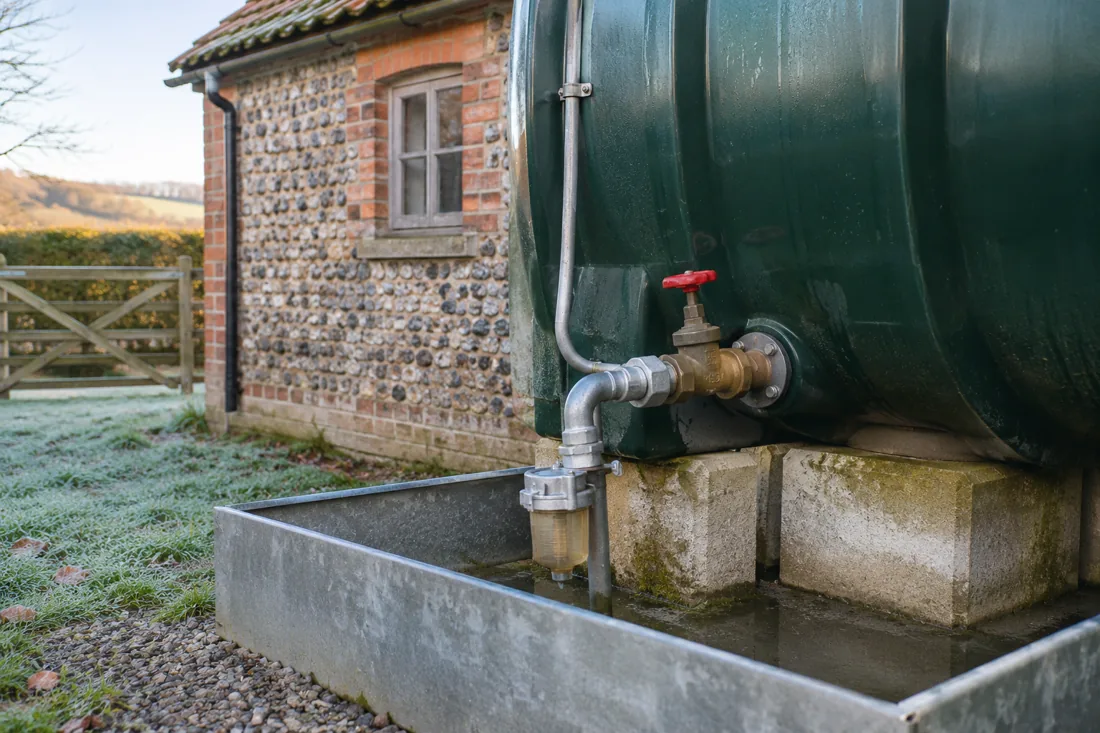
What Should You Do First?
Keep people and animals away from affected ground and avoid contact with escaped oil. Do not wash it away, pump it into drains or attempt to patch a failing tank. Stop any planned fuel delivery and seek specialist help, explaining whether oil is still escaping and where it appears to be going.
If oil has reached, or could reach, a drain, stream, river or other water, use the Environment Agency’s pollution reporting route promptly. Contact your insurer to explain the circumstances and ask about the next steps. This website’s enquiry form is not an emergency dispatch service and should not delay reporting or immediate professional assistance.
Which Signs Need Investigation?
A visible wet seam or split is a clear reason for concern, but leaks can be less obvious. An unusual oil smell, stained ground, oil collecting in the bund or a fuel level dropping unexpectedly can indicate a problem. A supply pipe or fitting may be responsible even where the tank wall appears intact.
Describe when you first noticed the issue and whether it followed a delivery, maintenance or ground movement. Do not enter an enclosed area that smells strongly of fuel to investigate. Keep observations to what can be seen safely, and avoid repeatedly restarting equipment while a suspected fuel-supply fault is being assessed.
Can The Remaining Fuel Be Saved?
Recovering fuel from a damaged tank can reduce the amount at risk, but the operation needs suitable pumps, hoses and receiving storage. The specialist must assess the tank’s stability and condition before moving its contents. A badly damaged vessel or a difficult position may require a different approach from a planned transfer.
Usable oil should remain separate from contaminated water and sludge wherever practical. Do not decant it into buckets, water tanks or unapproved containers. Tell the contractor roughly how much fuel remains, whether the level is changing and whether there is space for temporary storage without blocking access or creating another pollution risk.
Is A Repair Or Replacement More Appropriate?
The assessment must distinguish a failed fitting from damage to the vessel itself. A split or distorted plastic tank should not be treated as a candidate for an improvised patch. Corroded steel, a damaged bund and a sinking base can also make continued use unsafe even if the visible escape appears small.
Replacement may need a revised position or new base, so the immediate fuel recovery and permanent work can be separate stages. Ask the contractor to explain what makes the installation safe now, what remains to be done and whether the heating can operate before the final replacement is complete.
What If Oil Has Reached The Ground?
Removing a leaking tank does not establish that the land beneath it is clean. Oil can move through ground and along drainage routes beyond the visible stain. An environmental specialist may need to investigate the extent, advise on sampling and plan any clean-up in coordination with the insurer and relevant authorities.
Keep a record of what you observed and when, with photographs taken from a safe position. Avoid excavating contaminated soil or covering the area before advice is obtained. Ask how the tank works, contamination investigation and any reinstatement will be coordinated so one contractor’s work does not obscure evidence another needs.
What Information Helps The Response?
Give the exact property location, safe access instructions and a contact number in your enquiry if you wish. Explain whether oil is actively escaping, whether it is contained within a bund and whether drains or water are nearby. Include approximate tank capacity and fuel level if known without approaching unsafe ground.
Photographs of the overall arrangement, visible damage and the route to a parking position help scope equipment. Mention soft ground, gates and steps. At a business or farm, identify the fuel, equipment supplied, site contact and any shutdown arrangements. Tell the specialist about actions already taken by an insurer or another contractor.
What Determines Cost And Completion Records?
Fuel recovery, temporary storage, replacement, waste removal and environmental investigation are different elements of a leak response. Price depends on remaining volume, safe access, tank condition and how far contamination may have travelled. A defined tank-removal price does not automatically include excavation, clean-up or reinstatement of affected land.
Keep the findings, photographs, fuel-handling description, waste records and replacement documentation that apply to the actual work. Where pollution is investigated, retain the assessment and any remediation records separately. A completion note for tank removal should not be presented as proof that surrounding soil or groundwater has been tested and found unaffected.
Your Questions Answered
Is Oil Inside The Bund An Emergency?
Oil inside the bund means the containment needs prompt professional assessment, even if no liquid appears to have escaped outside it. Stop further deliveries and keep clear of the liquid. Do not drain the bund or try to transfer fuel yourself, and use the pollution reporting route if water or drains may be affected.
Can I Use The Enquiry Form For An Active Spill?
An active oil spill needs prompt specialist assistance and pollution reporting where appropriate. The enquiry form can share details for follow-up, but it is not continuously monitored for emergency dispatch. Do not wait for a form response before contacting your insurer, a suitable emergency contractor or the Environment Agency through its official reporting page.