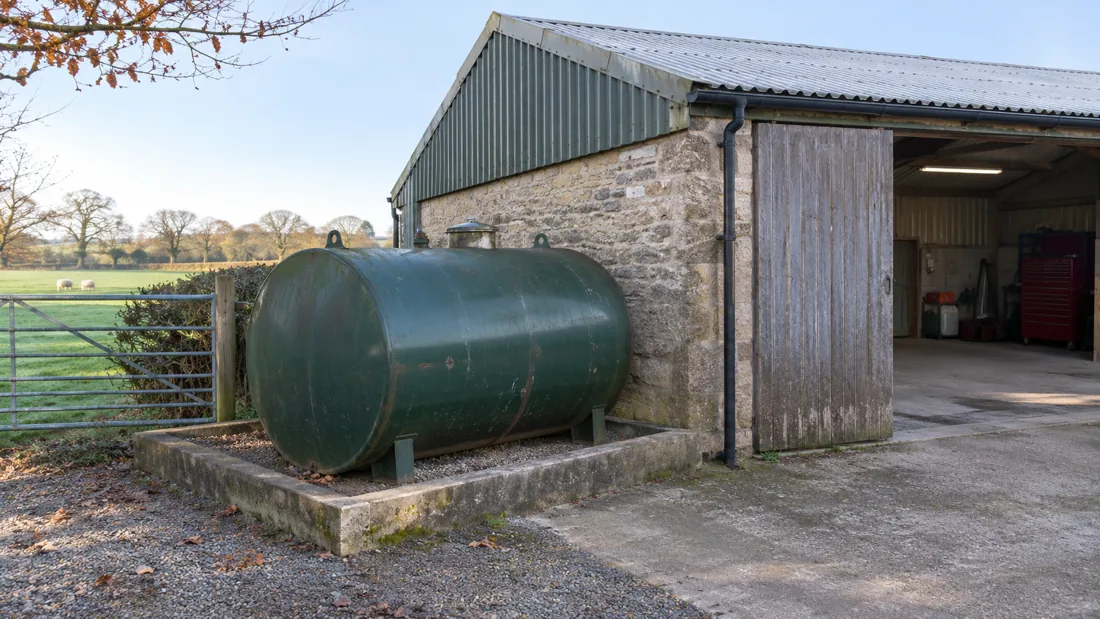
Does The Tank Need To Go?
An unused tank can remain a problem long after a heating system changes. Residual oil, redundant fill pipes and an unstable base all need attention before the space becomes a garden, an extension or a route for building work. Removal starts by establishing what is still inside and what is connected to it.
For a home switching away from oil, arrange the removal alongside the new heating programme. For a workshop, school or farm, identify every appliance or piece of plant supplied by the tank before disconnection. If you still need oil heating, a coordinated replacement is usually a more useful enquiry than a stand-alone removal.
Can The Remaining Oil Be Kept?
A tank does not have to be run dry before removal. Tell us the approximate gauge reading and when fuel was last delivered, without opening the tank or trying to measure it yourself. The contractor checks whether the oil is suitable for transfer and whether an appropriate receiving tank is available.
Usable fuel needs to stay separate from water and sludge lifted from the bottom. Oil that cannot be reused needs an agreed disposal route. Do not assume a full tank has no value, or that all of its contents can be recovered. The quotation should explain fuel handling and any temporary storage.
How Will It Leave The Property?
The removal route matters as much as the tank size. A tank installed before a conservatory, fence or extension may no longer fit through the original access. Send a view from the tank towards the road, along with the narrowest gate, any steps and changes of level.
After isolation, draining and cleaning, a sound access route may allow removal in one piece. Where sectioning is necessary, the contractor chooses the method after assessing the contents and hazards. Never cut an apparently empty tank yourself. HSE warns that tanks which held flammable liquids can present fire and explosion hazards during cutting or repair.
What Is Included In The Work?
Agree the scope before the appointment: removal of the tank, handling of fuel and residues, redundant pipework, supports and any base demolition are separate things to specify. A remote fill point needs particular attention so a future delivery cannot be made into a disconnected line.
Removal does not automatically include soil excavation, landscaping or restoring a wall opened for access. Ask what the area will look like at handover and whether any base will remain. On commercial premises, discuss vehicle segregation, permits, isolation responsibilities and the contractor’s risk assessments and method statement before work begins.
What Changes The Cost?
Cost depends on capacity, construction, remaining liquid, cleaning requirements and the route out. A small plastic tank with direct driveway access is a different job from a steel tank behind a building. Lifting equipment, difficult hose routes and restricted working hours can change both the equipment and labour needed.
Photographs can support initial scoping, but hidden connections or uncertain underground sections may require a visit. Tell us about parking restrictions and surfaces that cannot carry a heavy vehicle. A clear quote distinguishes the removal price from optional base removal, reinstatement and any investigation of suspected contamination.
Which Records Should You Keep?
Ask the contractor to describe the waste streams and the records appropriate to each. Clean tank material, discarded oil and contaminated residues do not all follow the same route. Retain the invoice, completion description and relevant waste documents, with any testing or specialist certification that the actual method requires.
Do not treat a gas-free certificate as a standard substitute for documenting the whole removal. For property records, note whether the tank and its pipework were removed or simply made safe. If staining, odour or oily soil is discovered, record it and seek separate environmental advice before covering the area.
What Should You Send Us?
Send your postcode, tank material and capacity if known, current use and approximate remaining fuel. Include photographs of the tank, its base, visible connections and the complete route to a vehicle parking position. A photo of the label is useful if it can be taken safely from ground level.
Mention whether you are changing heating, selling the property or coordinating with a builder. Give the required date as a preference rather than assuming a booking is confirmed. If there is an active leak, use the leaking-tank guidance first and describe it at the start of your enquiry.
Your Questions Answered
Can An Empty Tank Be Taken Straight Away?
An empty oil tank still needs assessment because residue can remain in the base, seams and fittings. Safe removal includes checking connections and dealing with that residue before transport or sectioning. Tell the contractor when the tank was last used and whether it has already been professionally decommissioned, with any records you hold.
Will The Concrete Base Be Removed?
Concrete base removal should be agreed separately from oil tank removal. You may want to retain it for a replacement tank, or remove it for landscaping. Include photographs and explain your intended finish so the quotation can cover demolition, handling the resulting material and any access needed for that work.