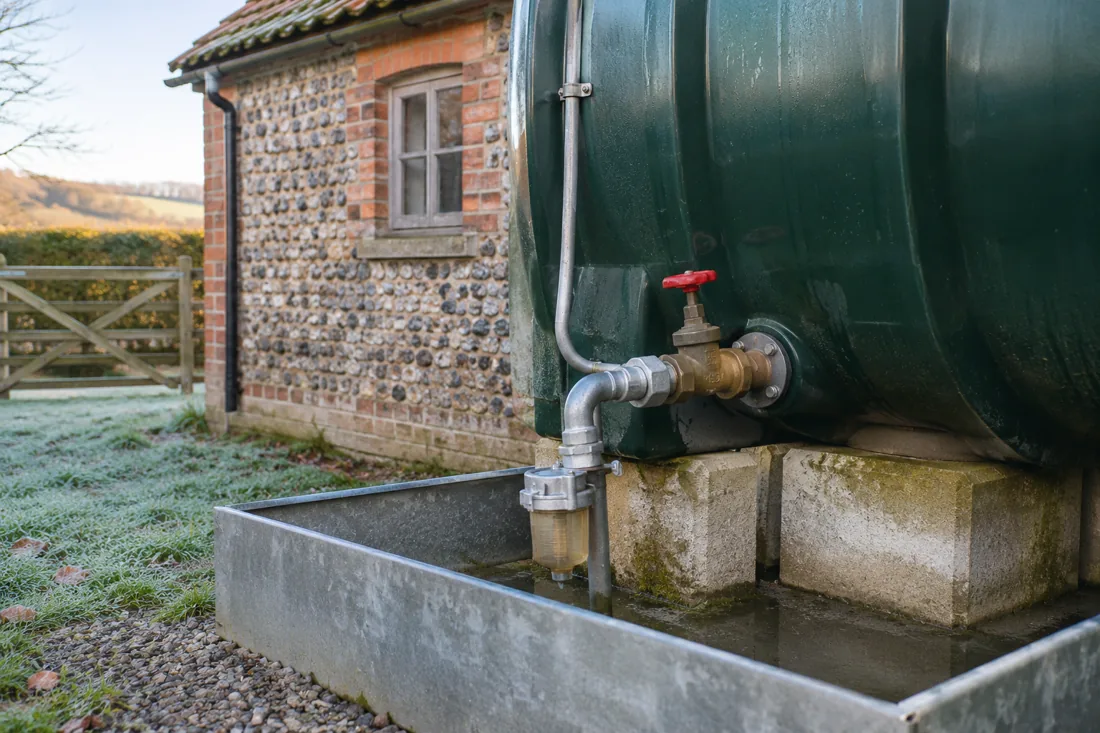
What Should Be Decided Before Ordering?
A new oil tank installation begins with the intended use: domestic heating, a commercial boiler, a generator or another fuel system. The contents and demand influence the specification, fittings and risk assessment. Tell us whether the project replaces another heating source, serves a new building or adds separate storage to an existing site.
Capacity should reflect consumption and delivery arrangements without using up all the available working space. An installer needs room to connect, inspect and maintain the tank. Buying on dimensions alone can leave too little space for secondary containment or put the fill point somewhere difficult to supervise during deliveries.
Where Can The Tank Be Positioned?
Consider the building, boundaries, doors, windows and other features that affect fire protection, together with drains, ditches and water supplies that affect pollution risk. A location that looks convenient from the kitchen may be awkward for a delivery hose or difficult to inspect behind a hedge.
Somerset properties can include outbuildings, gardens on different levels and access through older walls. Describe what is actually present rather than assuming a standard garden installation. If work affects a listed building or protected setting, check the relevant consent requirements before alterations. Planning consent and Building Regulations are separate matters to confirm for the proposal.
What Makes A Suitable Base?
The base supports the complete loaded installation, including the outer containment where present. It needs to be level, stable and compatible with the tank manufacturer’s instructions. Ground preparation matters because a carefully positioned tank can still suffer if support settles or water undermines the surrounding surface.
Ask the installer to specify the base footprint, construction and preparation rather than asking a builder to copy the old tank’s supports. Agree who provides it and who checks it before delivery. Where fresh concrete is involved, include curing in the schedule and keep the delivery date dependent on the base being ready.
How Do Domestic And Commercial Requirements Differ?
GOV.UK requires new domestic oil tanks in England to meet Building Regulations and recommends using an installer registered with a competent person scheme. That route allows the installer to self-certify qualifying work. Where another route is used, building control arrangements need to be made before installation, with the resulting compliance records retained.
Commercial storage needs assessment for its particular use and applicable rules. Generator and dispensing systems are not simply enlarged home heating installations. Farms can have different requirements depending on whether fuel serves agricultural heat and power or the farmhouse. Describe the fuel and its purpose clearly so the right regime is considered.
What Is Connected And Tested?
Installation includes more than setting a vessel on a slab. The scope may include the oil line, filters, isolation points, fire protection, level indication and overfill arrangements. The installer identifies which components are required and where they should be accessible for maintenance without compromising containment or safe operation.
The completed arrangement is checked before handover, with commissioning appropriate to the equipment it serves. For a commercial installation, agree any interfaces with electrical contractors and controls specialists. Do not attempt live electrical alterations yourself. Establish who is responsible for each connection and for confirming the complete system is ready to use.
What Changes The Installation Price?
The main cost drivers are tank specification, groundwork, access, pipework length and protection measures. Restricted access can change delivery and lifting arrangements. A distant boiler or generator may need a more involved supply route, while a new location can require preparation that is easy to miss in a photograph.
Ask for an itemised scope that identifies the tank, base, installation, testing and documentation. Also check what is excluded, such as major excavation or making good surfaces beyond the immediate work area. If this project includes an old tank, add removal and remaining fuel handling explicitly rather than treating them as assumed extras.
What Information Starts The Design?
Send your postcode, the intended fuel and use, the approximate capacity you have in mind and a description of the equipment supplied. Photograph the proposed position from several angles and show the delivery route, gates and vehicle standing area. Include known drains, watercourses and water supplies in your description.
If there is oil in an existing tank, say how much and whether you hope to retain it. A new installation may be arranged alongside removal or replacement, with recoverability assessed first. At handover, keep the specification, warranty, commissioning information and relevant compliance records together for maintenance, insurance and any future property sale.
Your Questions Answered
Can I Supply My Own New Tank?
A customer-supplied oil tank needs checking for suitability before installation is agreed. The model, capacity, containment and base requirements must fit the proposed location and use. Send the product details before ordering, and clarify which party covers supply faults, installation work, delivery damage and warranty administration so responsibilities are understood.
Is A Double-Skinned Tank Always Bunded?
A double-skinned oil tank is not automatically suitable secondary containment simply because it has two walls. The outer construction must provide the required containment function and capacity. Ask for the manufacturer’s specification and the installer’s assessment of the complete arrangement rather than relying on a short product description or appearance.